Humanism and
Jai Prithvi Foundation
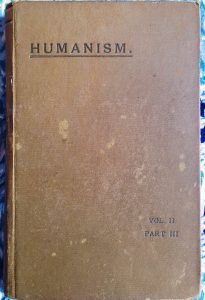
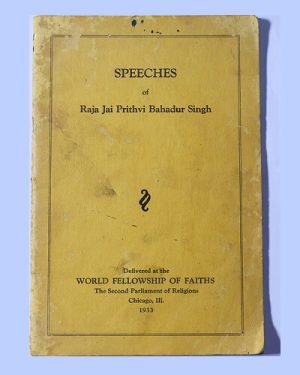
We proudly advocate that Jai Prithvi Bahadur Singh’s Three Volume magnum opus, HUMANISM (1928), is the World First Complete and Standalone Philosophycal Book dedicated intirely to the system of humanism. Published five years before the Western ‘Humanist Manifesto’ of 1933, this text establishes Nepal’s contributions to to global intellectual history.
Introduction
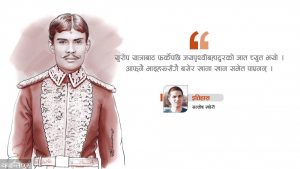
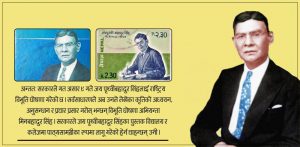
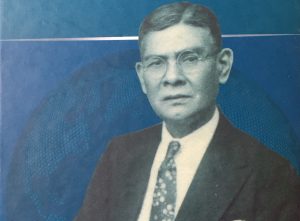
Jai Prithvi Bahadur Singh of Nepal was an advocate and a preacher of world peace; a thinker and a philosopher of humanism. He was born on B.S. 1934 Bhadra 7 ( August 23, 1877) in Chainpur, Bajang as the eldest son of Bikram Bahadur Singh and Rudra Kumari Rana Singh (daughter of Prime Minister Jung Bahadur Rana), the fifty-fifth Raja of Bajang Colonel State.
(नेपालको बाईसी राज्य भित्र पर्ने बझाङ राज्यका ५५ औं पुस्ताका राजा बिक्रमवहादुर सिंह तथा रानी रुद्रकुमारी सिंह (तत्कालिन नेपालका प्रधानमन्त्री जङ्गवहादुर राणाकी जेठी छोरी) का जेष्ठ सुपुत्र जयपृथ्वीवहादुर सिंहको जन्म १९३४ साल भाद्र ७ गते (२३ अगस्ट १८७७) नक्षेत्र २२ राशौ १० तिथौ १३ बारे ३ रात्रि लग्ने २ घडी ९ पला ३० चैनपुर पुरानो दरवारमा भएको थियो । )
Humanistic Club Member 1928 Bangalore India
Goal
Objective
The general objective is to disseminate humanist thought among students, youths, women’s and the
elderly to regenerate ethical values and deepen the roots of peace in human society
Built in 1905, this stately pile has been a family home, a reluctant ruler’s palace, and is now a spiritual centre. Its early history is slightly hazy.
According to one family’s lore, the building was the building was constructed by a son or grandson of Gangadhar Chetty, a wealthy merchant and contractor in the erstwhile Civil and Military Station of Bangalore, and after whom the road itself is named.
Chetty probably sold the house to T Vijaya Raghavulu Naidu, a respected officer in the C and M Station’s administration. According to Naidu’s great-granddaughter Lalitha Jayakumar, her grand father T Abboy Naidu then sold the house when he required funds for his daughter’s wedding.
The house was bought by Colonel Jai Prithvi Bahadur Singh, the Raja of Bajang, a state in Nepal. Jai Prithvi was no ordinary dynast. He was the son-in-law of the Prime Minister Chandra Shumsher Rana, then the most powerful man in Nepal.
He was a philosopher, a writer, educationist and reformer. He published several books for students and general readers on varied topics, started the publication of one of Nepal’s earliest newspaper Gorakhapatra and general readers on varied topics, undertook land reform and established the first school for commoners in Bajang.
In 1916, Jai Prithvi abdicated in favour of his father and moved with his family to Nainital. He bought the house on Gangadhar Chetty Road in 1921.
His new home, renamed Jaya Bhavan, became the centre of much of his world peace work. In 1928, he established the Humanistic Club and published a Humanism books, the Humanist journal. The weekly meetings held in Jaya Bhavan were often addressed by luminaries including Sir M Visvesvaraya.
As a foreign national, especially one who fraternised with inquirers and intellectuals, the British Raj naturally kept tabs on him, suspecting him of espionage. In 1932, when the Mysore State made him a state subject, the British government fretted about the retired Raja, describing the peace-loving Jai Prithvi as “a thoroughly undesirable individual.” In May 1940, his movements were curtailed. He died on September 15, 1940.
Jaya Bhavan was home to other Nepali royals, including Jai Prithvi’s brothers-in-law Mohan Shamsher whodied in Bengaluru in 1967, and Krishna Shamsher, who came here in the 1960s, fleeing political persecution. He died in 1977. Two years later, his wife donated the bungalow to the Sri Aurobindo Society.